304 North Cardinal St.
Dubai, UAE
+087347r26437

304 North Cardinal St.
Dubai, UAE
+087347r26437

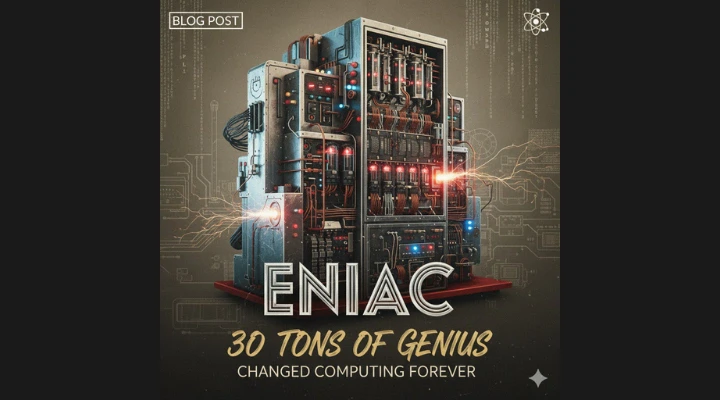
Before the cloud, before the chip, there was ENIAC — a thunderous hum that marked the dawn of our digital story.
If you’re reading this on your laptop, phone, or even your smartwatch, take a pause. Somewhere deep in the corridors of computing history, a massive machine once took an entire room — humming, glowing, and calculating like a mechanical beast. Its name? ENIAC — The Electronic Numerical Integrator and Computer.
Back in 1946, when “digital” wasn’t even a household word, ENIAC became the first general-purpose electronic computer in the world. It didn’t fit in your pocket — it was the pocket, the room, and half the building combined. Yet, this granddaddy machine changed everything.
Here’s the kicker: This behemoth that took up 1,800 square feet of floor space and required a small power plant to run was considered a miracle. And honestly? It absolutely was.
The Birth of a Digital Giant
ENIAC was born at the University of Pennsylvania, designed by John Mauchly and J. Presper Eckert. The duo didn’t just want to make a faster calculator — they wanted to redefine how humans compute.
At the time, calculations were done by hand or using slow mechanical devices. The U.S. Army needed something to calculate artillery firing tables faster during World War II. So, they funded what would become the world’s first electronic computer, capable of solving in seconds what took humans hours.
Imagine the scene — hundreds of glowing vacuum tubes, the smell of warm metal, switches clicking, and cables tangled like digital vines. It was a machine from the future living in 1946.
What Made ENIAC Revolutionary? (Spoiler: Everything)
ENIAC wasn’t just another calculator — it was a programmable machine, a revolutionary idea then.
The Numbers That Blow Your Mind
Let’s talk specs, but make them fun:
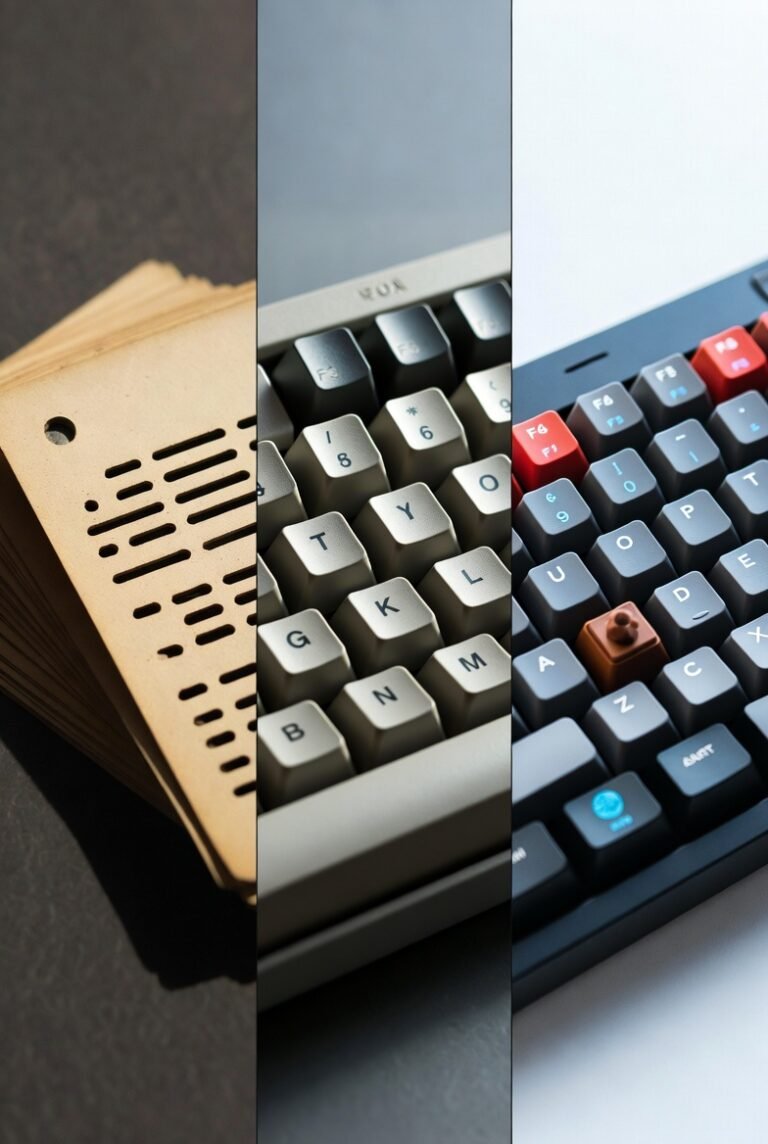
Programming ENIAC wasn’t like today’s coding — there were no keyboards or screens. To change its function, engineers manually rewired it using plugs and switches. It was physical programming, almost like sculpting electricity.
When “Debugging” Meant Pulling Out Wires
The term “debugging” in computing comes from an era when computers had literal bugs — sometimes moths short-circuiting the circuits!
ENIAC’s operators, often brilliant women mathematicians known as “computers,” would spend hours configuring and troubleshooting the machine. One wrong cable, and the whole system could go dark.
It was tedious but magical — like talking to the future one wire at a time.
Why It Mattered (The Real Story)
Before ENIAC, “computers” were humans – literally people, often women, who performed calculations with mechanical calculators. A complex ballistics trajectory calculation could take these human computers up to 20 hours. ENIAC could do it in 30 seconds.
Let that sink in.
This wasn’t just faster computing. This was time travel. This was humanity suddenly gaining superpowers.
The Unsung Heroes Behind the Machine
The Masterminds: Mauchly and Eckert
John Mauchly, a physicist with big dreams, and J. Presper Eckert, an engineering prodigy barely out of grad school, pitched the U.S. Army an audacious idea: build a machine that could calculate artillery firing tables faster than any human team.
The Army, desperate for accurate ballistics calculations during WWII, gave them the green light. The result? A technological leap that would define the century.
Read More: Welcome to the Future of WordPress with Gutenberg
The Original Programmers: Six Women Who Made History
Here’s where the story gets even better – and criminally overlooked for decades.
Six brilliant women – Kay McNulty, Betty Jennings, Betty Snyder, Marlyn Wescoff, Fran Bilas, and Ruth Lichterman – were the world’s first programmers. They figured out how to make ENIAC actually do things. Without manuals. Without training programs. Just raw problem-solving genius.
They created programming methods, debugged by literally crawling inside the machine to find faulty vacuum tubes, and demonstrated ENIAC to the press and military brass. Yet for years, they received almost no recognition.
Today, we honor them as the pioneers who proved programming was an art form.
A Day in the Life of ENIAC
How Did This Thing Actually Work?
Imagine trying to send a text message, but first you need to:
Programming ENIAC wasn’t typing code – it was engineering a machine every single time.
Operators stood on ladders, navigated between towering panels of blinking lights and humming electronics, and performed what was essentially electronic choreography. One wrong cable connection, and your calculations were toast.
ENIAC’s Greatest Hits
What Did It Actually Calculate?
1. Ballistics Tables (its original mission)
2. Weather Prediction
3. Nuclear Weapons Design
4. Pure Mathematics
The Technical Magic (Simplified)
How ENIAC Actually Computed?
At its heart, ENIAC was an electronic calculating machine that used:
The genius moves? Making it electronic instead of mechanical. Electromechanical calculators of that era used gears and relays. ENIAC used pure electron flow, making it thousands of times faster.
Legacy: From ENIAC to Your iPhone
The Butterfly Effect of Innovation
ENIAC didn’t just solve math problems. It unleashed a revolution that cascaded through decades:
1946: ENIAC proves electronic computing works
1950s: Commercial computers emerge
1960s: Integrated circuits make computers smaller
1970s: Microprocessors birth personal computing
1980s-90s: PCs enter homes worldwide
2000s: The internet goes mainstream
Today: We carry computers in our pockets more powerful than millions of ENIACs combined
Your smartphone has:
And yet, none of it would exist without that 30-ton monster in Pennsylvania.
Fun Fact: ENIAC’s First Task
You might think ENIAC’s first job was some grand military mission. Nope — it calculated the trajectory of artillery shells.
But soon, it was solving far more complex equations, including early nuclear research and weather prediction.
In short, ENIAC went from war to weather — a fitting start for something that shaped peace and progress.
Lessons from ENIAC for Modern Tech
What We Can Still Learn Today
1. Collaboration Across Disciplines Wins ENIAC succeeded because physicists, engineers, mathematicians, and programmers worked together. Today’s best innovations still follow this model.
2. Trust Unproven Ideas Nobody had built anything like ENIAC before. It was a massive risk. Sometimes the biggest leaps require betting on the unprecedented.
3. Recognize All Contributors The story of the six women programmers reminds us that innovation has many authors. Credit matters.
4. Constraints Drive Creativity Working within ENIAC’s limitations forced programmers to develop techniques still used today. Constraints breed innovation.
Why ENIAC Still Matters Today
In a world chasing AI, blockchain, and quantum computing, ENIAC feels like a prehistoric fossil — yet it’s the bedrock of our digital civilization.
Understanding ENIAC isn’t just nostalgia — it’s a reminder that:
ENIAC is our digital ancestor, whispering through time: “Imagine bigger.”
Fun ENIAC Facts to Impress Your Friends