304 North Cardinal St.
Dubai, UAE
+087347r26437

304 North Cardinal St.
Dubai, UAE
+087347r26437

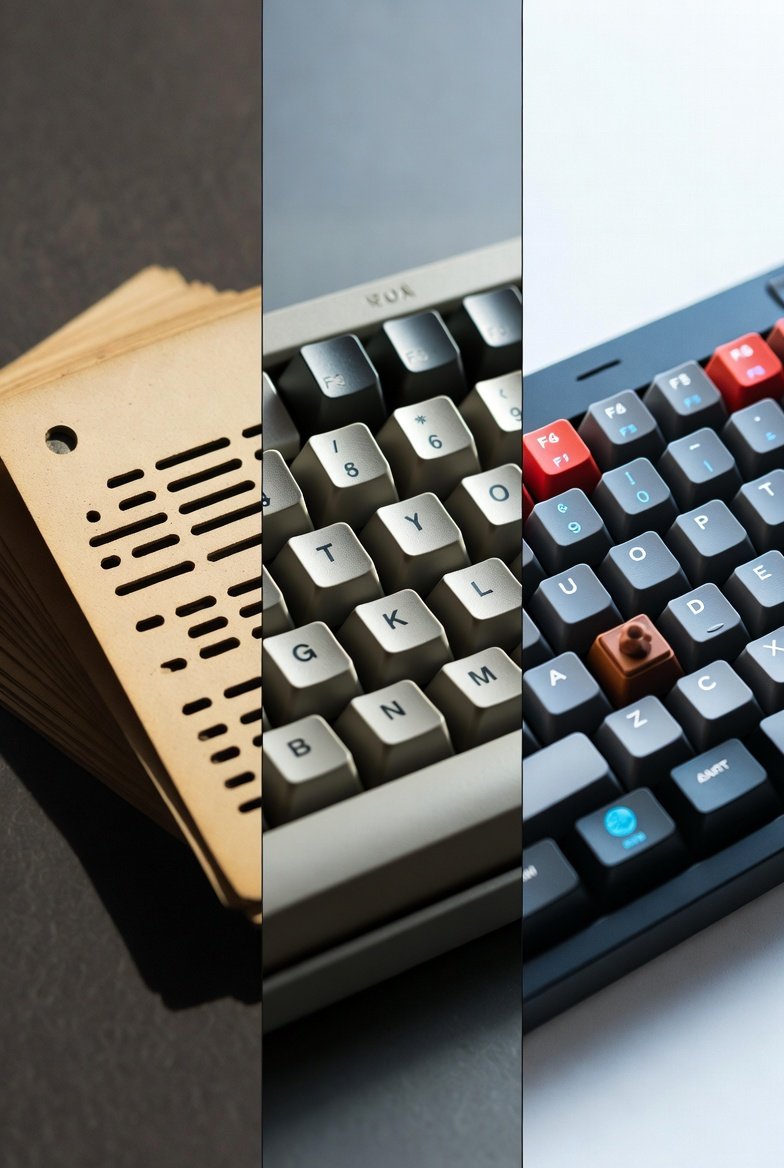
Ever wonder how we went from literally punching holes in cardboard to arguing about whether mechanical or membrane keyboards are superior? The journey of input devices is one of computing’s most tactile tales—a story you can literally feel under your fingertips every time you type.
Buckle up, because we’re about to take a wild ride through the evolution of how humans learned to communicate with machines.
Spoiler alert: it involves a lot more holes, clicks, and ergonomic debates than you’d expect.
The Punch Card Era (1890s-1980s) – “Before touchscreens and voice commands, computers spoke a different language — and it was full of holes.”
It’s easy to forget that once upon a time, computers couldn’t “understand” us the way they do now. There was no typing, no clicking, no tapping.
To communicate with machines, we literally punched holes into stiff paper cards — one hole for one piece of data.
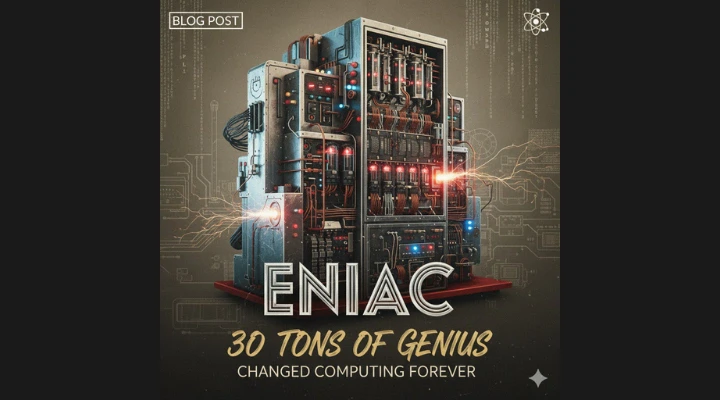
Fore More: https://digihaunt.com/eniac/
The Original “Press Any Key”
Picture this: It’s 1950, and you’re a programmer. There’s no keyboard shortcut for “Ctrl+C.” Heck, there’s no keyboard at all. Instead, you’re standing at a desk with stacks of rectangular cardboard cards, a specialized punch machine, and the weight of knowing that one misplaced hole could crash an entire calculation that took weeks to set up.
Punch cards were the OG input device—literally predating electronic computers by decades. Herman Hollerith invented them in 1890 for the U.S. Census, and by the mid-20th century, these humble rectangles of cardboard with carefully positioned holes became the primary way humans communicated with early computing machines.
How Punch Cards Actually Worked
The concept was beautifully simple yet maddeningly precise:
The romance? There was something poetic about physically crafting each instruction. The reality? Drop a box of 2,000 sequentially numbered cards, and you’d better hope you numbered them—or prepare to spend your afternoon solving the world’s most frustrating jigsaw puzzle.
The Culture of Punch Cards
Punch cards created their own unique culture in early computing:
Welcome to the journey from punch cards to keyboards — the story of how human interaction with computers evolved, bridging logic and language from 1980 to 2020.
Fun fact: Some programmers would deliberately punch specific patterns into cards to create ASCII art—the first computer art form that was literally hands-on.
Keyboard Revolution (1960s-1980s) – When We Got Interactive
Enter the Teletype: Clacking Into the Future
While punch cards still dominated in the 1950s-60s, a parallel technology was about to change everything: the teletype machine. Originally designed for telegraph communication, these mechanical beasts adapted beautifully to computer input.
The Model 33 ASR Teletype (1963) became iconic in early computing:
Why this mattered: For the first time, programmers could interact with computers in something resembling a conversation. Type a command, get immediate feedback. It was revolutionary.
The Shift: From Paper to Plastic and Keys
By the 1970s and early 1980s, punch cards were still in use, but the world was changing fast. Computers were shrinking, and so was the patience to feed them cards all day.
The 1970s brought the keyboard from industrial teletype to integrated computer component. Several milestone keyboards emerged:
The Data point 3300 Terminal (1969): One of the first video display terminals with an integrated keyboard. Suddenly, you weren’t printing everything—you were seeing it on a screen.
The IBM Model F (1981): This legendary keyboard introduced buckling spring switches—the satisfying click-clack that mechanical keyboard enthusiasts still worship today. With the IBM PC’s launch, this keyboard defined what typing on a computer should feel like.
The Apple II Keyboard (1977): Apple brought keyboards into homes with a design that was cleaner, quieter, and more approachable than industrial alternatives. Steve Wozniak’s engineering made typing feel less like operating machinery and more like… well, typing.
The Great Keyboard Wars: Mechanical vs. Membrane
By the early 1980s, two philosophies emerged:
Mechanical Keyboards:
Membrane Keyboards:
The 1980s debate: Gamers and programmers argued passionately about which was superior—a debate that continues today in Reddit threads and Discord servers.
The Keyboard Revolution — When Typing Became Power
The keyboard wasn’t a brand-new idea; it evolved from the typewriter — that rhythmic machine that once defined office work and journalism.
But when the personal computer (PC) entered the 1980s, everything changed.
Computers were no longer reserved for labs or governments — they were coming to homes, classrooms, and small businesses.
And the keyboard became the voice of this revolution.
From Batch Processing to Real-Time Computing
The shift from punch cards to keyboards wasn’t just about convenience—it fundamentally transformed what computers could do:
With Punch Cards:
With Keyboards:
This seemingly simple change unleashed human creativity. Programmers could now experiment, play, and innovate in real-time. The feedback loop collapsed from days to seconds.
1980s – The Click Heard Around the World
IBM’s Model M keyboard became iconic — loud, tactile, and unbreakable.
Those “clicks” were more than sounds; they were the rhythm of a new digital generation.
Every keystroke meant creation: lines of code, stories, spreadsheets, and dreams typed into existence.
People were no longer punching holes; they were expressing thoughts directly to machines.
The Personal Computer Revolution
Keyboards democratized computing. When machines moved from specialized rooms requiring trained operators to desks in homes and offices, the keyboard was the bridge. Everyone could type—it was a skill society already valued.
The keyboard’s familiarity was crucial:
By 1985, computer literacy increasingly meant keyboard literacy. The input device became so intuitive that it disappeared—users focused on what they were creating, not how they were inputting it.
The Ergonomic Awakening (1990s-2000s)
As computers moved into every workplace, a new problem emerged: repetitive strain injuries. The 1990s saw an explosion of ergonomic keyboard designs:
The keyboard evolved from purely functional to health-conscious—a recognition that how we interface with technology affects our bodies.
Why the Keyboard Won?
Here’s why keyboards became the gold standard of input devices:
It was no longer a one-way conversation — it was a dialogue.
Beyond Keys: 2000s–2020 — When Touch Became the New Type
Fast forward a few decades. The mechanical “click” slowly gave way to the soft hum of touchscreens and voice commands.
By the early 2000s, devices like the iPod and BlackBerry were changing our habits.
Typing wasn’t just an office task — it was texting, chatting, and connecting.
From Keyboards to Touchscreens
The arrival of the iPhone in 2007 marked another revolution:
Touchscreens became intuitive, eliminating physical buttons entirely.
Now, your finger was the keyboard.
We traded clicks for swipes, keys for gestures, and punch cards for pixels.
Yet the core idea remained the same — human input shaping machine output.
The Return of Tactility: Why Keyboards Still Rule
Here’s the twist — even in 2025, despite touch, voice, and AI — the keyboard refuses to die.
Developers, writers, gamers — all crave the precision and feedback of physical keys.
In a sense, the keyboard has become a symbol of control — where human creativity meets digital structure.
That’s why modern devices still include them — from laptops to tablets with detachable keys.
The evolution didn’t erase the past; it merged it with the future.
The Legacy and What We Can Learn
From 80 Columns to Infinite Possibilities
That 80-column punch card limit? It influenced programming style for decades. Even today, many coding style guides recommend 80-character line limits—a digital echo of physical constraint.
The lesson? Our input methods shape how we think and create. Punch cards encouraged meticulous planning. Keyboards enabled improvisation. Touchscreens foster gestural thinking. Voice interfaces may promote conversational programming.
The Keyboard Endures
Despite predictions of its demise with every new input technology (mouse! touchscreen! voice! gestures!), the keyboard remains essential. Why?
Your Keyboard’s Ancestry
Next time you sit down to type, remember:
You’re not just typing—you’re participating in 130+ years of human-computer interface evolution.
The Future Speaks Through the Past
The journey from punch cards to keyboards teaches us that interface evolution isn’t about replacement—it’s about refinement. Punch cards didn’t fail; they succeeded so well they made something better possible. Keyboards haven’t died; they’ve adapted, becoming thinner, smarter, more personalized.
As we look toward neural interfaces, AR/VR controllers, and AI-assisted input, we carry forward lessons from every hole punched and key pressed. The fundamental challenge remains unchanged: How do we translate human intention into machine action as naturally as possible?
The answer might look nothing like a keyboard. But it will stand on the shoulders of punch cards and QWERTY layouts—honoring the wild, creative, sometimes frustrating journey of teaching machines to understand us.
Now, if you’ll excuse me, I need to argue on the internet about whether Cherry MX Blues or Browns are the superior mechanical switch. Some traditions are sacred.
Written by the DigiHaunt Editorial Team
Part of the “Digital Evolution” series — exploring how yesterday’s innovations shaped the modern world.
Reading Time: 8-10 minutes